Pea Shoot, Sunflower Sprout, and Yellow Beet Salad with Goat Cheese

007

“The time has come, the Walrus said, to talk of many things:  of shoes and ships and sealing-wax.  Of cabbages and kings.  And why the sea is boiling hot.  And whether pigs have wings.” –Lewis Carroll

I’ve had this quote stuck in my head all day because I keep thinking, “the time has come, the time has come!”  The farmer’s market has returned and along with it, the excitement of seeing the produce parade, unfolding week by week.  Last week the most exciting finds at the market (for me) were pea shoots and sunflower sprouts.  This week, asparagus.  I wait all year for asparagus and am giddy when I see it make its brief appearance, standing at attention all down the rows of the market.  Alas, I am in Denver this week (well, not alas–I get to learn fly fishing in the mountains–can’t beat that!) and am missing out on the first appearance of asparagus at the market.  But lest I get ahead of myself…let’s talk about pea shoots.  And sunflower sprouts.  And last but not least, for a tour of my local farmer’s market, click here and I’ll show you around my beloved Fulton Street Farmer’s Market.

Sunflower Sprouts

Sunflower Sprouts

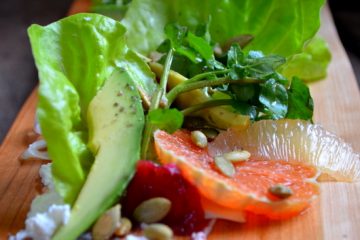
Before we went to the farmer’s market on opening day, May 4, I was imagining what we might find.  It was a cold and long winter so our produce in Michigan got a slow start.  Radishes, asparagus, pea shoots, leeks…all popped into my head.  We didn’t find radishes or asparagus last week but found pea shoots!  And sunflower sprouts!  I knew exactly what to do with these two wonderful spring vegetables.  This salad seemed the perfect thing to make and it allowed me to experiment with sauteing pea shoots.  This salad has both raw and sautéed pea shoots, some sunflower sprouts, yellow beets, radishes, and crumbled goat cheese.  Finished with a light honey-mustard vinaigrette, this salad was the essence of spring.

017

Spring Pea Shoot Salad with Sunflower Sprouts, Yellow Beets, and Goat Cheese; serves 1

  • 1 medium yellow beet, peeled
  • 1 teaspoon olive oil
  • 2-3 oz bag of pea shoots
  • 1/3 cup sunflower sprouts
  • 2 tablespoons goat cheese, crumbled
  • 1 tablespoon Dijon mustard
  • 1 tablespoon honey
  • ¼ cup apple cider vinegar
  • ¼ cup olive oil
  • Salt and pepper to taste
  1. Peel the beet and slice from top to bottom into thin wedges.  Place in a saucepan with water to cover and a dash of sea salt.  Bring to boil then turn heat down to simmer for about 10-15 minutes, until beets have softened but are not mushy.  They should still have a little bite to them.  Drain in a colander and let cool.
  2. Split pea shoots in half.  Arrange half of the pea shoots in a salad bowl—I like to use a shallow bowl to showcase the salad…much prettier that way!  Heat 1 teaspoon of olive oil in a skillet or wok.  Add the other half of the pea shoots to the pan and saute briefly, just until wilted.  Add the wilted pea shoots to the raw pea shoots in your salad bowl.  Add the sunflower sprouts to the pea shoots and toss.  Arrange the beet wedges amongst the greens and sprinkle the goat cheese on top of the salad. 
  3. Mix the mustard and honey together in a small bowl until combined.  Slowly drizzle the oil into the honey-mustard mixture.  Add the vinegar slowly then whisk to combine.  Season with salt and pepper.  Drizzle a little vinaigrette over the salad (there will still be vinaigrette left over for more salads).  Sit down and welcome spring with this simple salad.

Berry Almond Skillet Cake With a Side of Good News

Happy spring, everyone!  Spring has finally arrived here in Grand Rapids, Michigan.  Spring is my favorite season.  It is a time of renewal, fresh starts, and an emergence of life and beauty long-forgotten and buried under layers of snow.  This winter was a particularly long one so this spring is unfolding as the most beautiful I can recall.  To wake up hearing birdsong is an incredible thing but it is even more incredible to walk outside and be surrounded by green grass, flowering cherry, pear, and magnolia trees, tulips, daffodils, myrtle and phlox.  My favorites are the tulips surrounding my house and scattered in vases throughout my house.

074

This spring has been one of change and fresh starts for me.  I have been so busy lately and am working really hard to find time to blog about all of the dishes I have been making.  For every five dishes I make, one makes it to the blog.  One of these days I’ll take a blogging vacation, plop myself in a beautiful locale, and catch up on my posts….!  Luckily, the things that are keeping me busy outside of my busy work schedule are all positive things.  Moving the sweetie into my house has been a huge change and learning experience for me.  Turns out, I got used to living alone but I am looking forward to getting un-used to it and love the new comforts of home that he brings.  I just bought my first pair of waders and am going to learn how to fly fish on our drive out to Colorado next week!  On the food side, lately I have been making many more connections with the local food community and I am loving every minute of it.  Over the last few months I have created a Back to Basics series for the Grand Rapids Cooking School and Uptown Kitchen, have begun a Meatless Monday feature on Dr. Mary MD’s blog, was invited to participate in a Green Market Expo, and starting this week, will begin contributing a “Spotlight on Produce” series for the Uptown Kitchen blog and for The Rapidian, our hyper-local Grand Rapids news and culture source.  Each week I will shop at the Fulton Street Farmer’s Market and feature a recipe about one of the in-season vegetables or fruits sold by our local farmers.  Very exciting stuff!

And now…for the BIG NEWS.

As if all of that wasn’t enough, on Friday I received the most exciting email.  Cooking Light invited me to become one of their bloggers for the Cooking Light Bloggers Connection. Let’s just say, I was so excited that I squealed when I read the email.  And I am so thrilled that this hobby of mine has been noticed by one of my favorite publications and will be shared with a wider audience moving forward!  I will be adding a Cooking Light Blogger badge to my site and a couple of times a month, will be letting you all know about a recipe or featured article on the Cooking Light website.  I have been a subscriber to Cooking Light for about ten years and have really enjoyed seeing them grow and become the fresh and exciting publication they are today so am really excited to share some of their recipes and features with you moving forward.  Cooking Light may also ask me to provide tips and articles to them for publication on their website (which would be SO COOL).  My profile will be added to the Cooking Light Bloggers Connection page in the next week or so and I’ll share that when it becomes live.

097

To celebrate this exciting news, I baked a cake.  But first I have to tell you about another form of spring renewal.  My handy guy spent a couple of days restoring two cast iron skillets to their original glory (everything deserves a second chance, he said).  One was rusty and long lost in the basement.  The other was caked with years and years of build-up and was getting bumpy and flaky.  He devised an experiment, using electrolysis to remove the build up then expertly blued then cured them.  For a couple of days it looked like we were up to no good in the back yard, with a battery charger hooked to a metal plate submerged in a large rubber tub.  I’ll share the details with you all soon and there is even a video of this awesome process that I’ll share some other time.  The skillets turned out beautifully and work better than any other pans I own.  We are a 4 cast-iron skillet and 2 cast-iron dutch oven household now, with another on the way.

Okay…did I lose you when I started talking about the science of restoring cast iron?  Back to the food.

059

I have been coming up with any excuse to use these skillets lately.  Growing up, we made cornbread in our skillets about once a week and I’ve never made it any other way since.  With that memory in mind, and wanting to celebrate cast iron and change, I set about making a sweeter cake with blackberries, blueberries, and almonds.

068

Both blackberries and blueberries are out of season so I used frozen blueberries and bought some organic blackberries from the grocery store.  In honor of Cooking Light, I made this cake using a couple of my tricks to reduce fat:  apple sauce and sour cream. This cake came together in minutes, filled the house with amazingly delightful scents, and turned out dense, moist, and just sweet enough to feel decadent.  As it turns out, it tastes even better eaten as a snack in the middle of an afternoon of fly fishing (or so I am told).

071

I hope you enjoy this as much as I did.  Thanks for your support and for being wonderful friends and followers.

098

Berry Almond Skillet Cake

Makes 8 generous servings

  • 1 1/8 cup of all purpose, unbleached flour
  • 1/4 cup of whole wheat flour
  • 1/2 cup of almond meal
  • 2 teaspoons of aluminum-free baking powder
  • 1 teaspoon of sea salt
  • 1 cup of sugar
  • 1/2 cup of low-fat buttermilk
  • 1 tablespoon lemon juice
  • 2 large eggs
  • 3 tablespoons of butter, melted
  • 3 tablespoons low-fat sour cream
  • 3 tablespoons unsweetened apple sauce
  • 1 1/2 teaspoon pure almond extract
  • 1 tablespoon of butter to oil the skillet
  • 1 cup blueberries (fresh or frozen)
  • 1 5 oz container of blackberries
  • 1/4 cup turbinado sugar
  • 1/2 cup sliced almonds
  1. Preheat your oven to 350°. In a large bowl, whisk together the flours, almond meal, baking powder, salt, and sugar.
  2. In another bowl, whisk together the wet ingredients: buttermilk, eggs, lemon juice, melted butter, sour cream, apple sauce, and almond extract.
  3. Pour the wet ingredients into the dry ingredients and mix to combine.
  4. Add the remaining tablespoon of butter to a 10-inch cast iron skillet and place on a burner at medium heat until the butter is melted and the pan is hot. Swirl the butter to coat the skillet, then pour in the batter.
  5. Scatter berries and sliced almonds on top and sprinkle with turbinado sugar.
  6. Bake for 40-45 minutes, or until golden brown and a toothpick inserted into center comes out clean. Serve warm with vanilla ice cream or at room temperature with your morning coffee for an extra-special treat.

050

Chickpea and Quinoa Salad with Cashew Chutney

Chickpea and Quinoa Salad with Cashew Chutney

Well, it’s been a little while!  I’ve been busy, busy, busy.  This past weekend I had a Dinner With Aura booth at the Grand Rapids Public Library’s Green Market Expo.  It was so much fun!  I sold some granola and biscotti, raffled off Super Natural Everyday, and met so many awesome people who were interested in eating healthier.  Several folks mentioned that they were simply trying to reduce the amount of meat they ate, replacing a few meals a week with vegetarian options.  That got me so excited.  I truly believe that small changes add up.  It can be really intimidating to be expected to change everything about your eating habits.  Eating is such a personal and habitual experience so I believe that tackling one change at a time is the key to long-lasting change.  I met a lovely woman who wanted to start by eating vegan three days a week.  I’m so excited to hear how that goes for her and excited to see what new foods she will discover in the process.

175

I’ve also been busy moving my honey into my house.  Having lived alone for three and a half years, this has been a big change!  We are in the process of merging our things and getting into a routine.  I’m excited to see what the future holds for us.

This weekend was so busy that I just ate really simple dishes.  I was cooking for myself this weekend so things were back to my usual one person meals, quinoa with sauteed kale, zucchini, carrots, etc.  I really don’t mind eating like that most of the time but it is fun to have someone to cook for and I tend to make more substantial meals when I’m not on my own.

010

Today, I was so happy that at about 7:00 I finally had time to cook up the recipe for the Food Matters Project.  I was even more happy that it is finally spring and we have daylight at 7:00!  This dish was so easy to put together and so tasty.  All I can say is thank you for the awesome pick, Jess!  Once again, I had a hard time imagining what this salad would end up looking and tasting like.  The result was such a pleasant surprise.  It had so many flavors I love all in one bowl.  I modified the dish somewhat, adding quinoa, radishes, and peanut to the mix.  The chickpeas and quinoa provide protein and the nuts provide healthy fats.  This salad is a great main dish meal.  If you are looking for something a little different and very, very easy, try this!  You won’t be disappointed.  If you want the original recipe, head over to Jess’s site.  And to see the variations everyone came up with, head over to the FMP website.

025

Chickpea and Quinoa Salad with Cashew Chutney;adapted from Mark Bittman’s The Food Matters Project

  • 1 teaspoon cumin seeds
  • 1/2 small dried hot red chile or ¼ tsp of red chili flakes
  • 1/3 cup cashews (raw are fine)
  • ¼ cup peanuts
  • 1 small garlic clove, minced
  • Salt and black pepper
  • 3 cups cooked or canned chickpeas, drained
  • 1 and ½ cups quinoa
  • 1 cup chopped fresh mangoes (can also use apricots)
  • Juice of 1 lime
  • Olive oil as needed
  • 1/2 cup chopped fresh cilantro
  • 3 radishes, cut into matchsticks
  1. To make chutney:  In a small, dry skillet, combine cumin seeds, chili, cashews, and peanuts. Heat over medium heat, shaking pan frequently for 3 to 5 minutes or until everything colors slightly and becomes fragrant.
  2. Transfer to blender or food processor. Add garlic and a sprinkling of salt and pepper. Process, stopping machine to scrape down sides if necessary, until finely ground but not as smooth as peanut butter.
  3. To assemble salad: In a salad bowl, toss chickpeas, quinoa, and fruit with chutney. Add lime juice and a little oil if needed to help bring everything together. Stir in cilantro and radishes. Taste. Adjust seasoning. Serve immediately or cover and refrigerate for up to 1 day.  Enjoy!!!

Lubia Chalow–Afghan Lemony Kidney Beans

005

I’m happy to be hosting the Food Matters Project this week.  This was the perfect dish to make this Saturday on what was yet another rainy, cold April day in Michigan.  I have become accustomed over the last two months to the shared misery of a cold and rainy spring here (I have to remind myself that I am not alone in hoping for spring, lamenting every snow flake that falls–yup, we even got snow yesterday on April 14).  There is a sense of solidarity here in Michigan–we are in this together!  Because of this shared empathy about the weather, I kind of forgot that a lot of other areas of the country are having splendid spring weather, almost summery in fact.  So, here is to hoping that this dish is as satisfying in the warmer regions as it was here in the land of rain and snow.

I chose this dish for this week’s Food Matters Project because it is something that I normally might not make and I was really curious about it.  Bittman called it “Super Lemony Kidney Beans” and it sounded like it could either be really bad or really good.  Thank goodness it is the latter because this one, although requiring little hands-on time, takes a good chunk of time in the oven.  One thing that is really interesting about The Food Matters Project cookbook is that there are no photos so every recipe is kind of a surprise.  While I can usually imagine what the dish will taste like, I have a hard time imagining what it will look like.  This dish is based on an Afghan dish called lubia chalow and the best way to describe it is a bean stew with preserved lemons and plenty of spices (spicy-flavorful, not spicy-hot).  Having never cooked anything from Afghan cuisine, I was excited to try.  It used a lot of the same spices that I love to use in my cooking…cardamom, mustard seeds (I could write a blog post on how many ways I use mustard seeds in my cooking!), cumin seeds, cinnamon, chile, and garlic.

Spices for Lubia Chalow

It resembles a big pot of chili with the exception that rather than simmering slowly on the stove, it spends a couple of hours in the oven.  You’ll need a nice, heavy pot or Dutch oven–I used a Martha Stewart enameled cast iron Dutch oven.  A thinner pot might burn the food on the bottom in the oven.

009

I am staying at my friend, June’s, beautiful little house in the country.  It is so cozy in her house and, having been a little damp and cold after running through pouring rain into the house, I decided to plant my chair right by the oven and work on my computer in the warmth.  I also took some breaks to take some photos of the birds (through the window, of course)! 

001 (3)

028

After smelling cardamom, cumin, and cinnamon wafting through the air for the better part of two hours I could hardly wait to try this.  It was satisfying and very unique with the preserved lemons.  Oh, one thing I should note is that the recipe for the lemons makes a ton of preserved lemons (about 3 cups or so).  You can easily halve the recipe for the lemons and have enough for this dish with a little leftover.  Oh, and be sure to stop on by and see what everyone else on the Food Matters Project ended up creating here.

And just so you don’t think it’s all gloom and doom here, the sun finally came out Sunday (after the snow, sleet, and rain had made their point during the morning and early afternoon).  I finally got out for a walk with the pup.  It felt wonderful to get outside, breath in the fresh air, pick some daffodils, and stretch our legs.  I think my dog sums up perfectly how I felt yesterday–no words needed.

059 - Copy

Enjoy this dish and enjoy the springtime, wherever you are.

Lubia Chalow--Afghan Kidney Bean Stew

Lubia Chalow (Super-Lemony Kidney Beans); from Mark Bittman’s The Food Matters Project Cookbook

Serves 6 to 8; Takes about 3 hours, largely unattended

Based on an Afghan dish called lubia chalow, this soupy bean stew begins with quick preserved lemons, a staple of Middle Eastern cooking.  Usually the lemons are left whole or halved, heavily salted, and set aside to cure in a mixture of spices and their own juice.  Chopping the fruit helps speed the process considerably with delicious (if not entirely authentic) results.  Six lemons are enough so that you can use some of the mixture for the beans and store the rest in a jar in the fridge for later.  (They get better and better with age.)  These beans are good served over Basmati or jasmine rice with a dollop of yogurt.

  • 6 lemons
  • Salt
  • 1/3 cup olive oil (I reduced to about 2 tablespoons)
  • 2 onions, chopped
  • 2 tablespoons minced garlic
  • 1 tablespoon cumin seeds
  • 1 tablespoon mustard seeds
  • 4 cardamom pods (I did not have cardamom pods so I added 1 tablespoon cardamom–I love cardamom though–if you aren’t sure, you may want to add a teaspoon, then adjust at the end of cooking)
  • 1 cinnamon stick
  • 1 dried mild chile (I used ancho)
  • 1/4 cup tomato paste
  • 1 pound dried kidney beans, rinsed and picked over; don’t bother to soak them (I used cranberry beans, which are very similar)
  • Black pepper
  • 1/2 cup chopped fresh mint, for garnish (I used cilantro)
  1. Heat the oven to 325°.  Trim the ends from 4 of the lemons; quarter them, remove the seeds, and put them (rind included) in a food processor.  Add the juice of the remaining 2 lemos to the food processor (again, without the seeds) along with 2 teaspoons salt.  Pulse several times to chop the lemons into bits but don’t puree.  Put the mixture in a jar and leave it on the counter while you cook the beans; shake it every once in a while.
  2. Put the oil in a large ovenproof pot or Dutch oven over medium-high heat.  When the oil is hot, add the onions and cook, stirring occasionally, until soft, 3 to 5 minutes.  Add the garlic and cook for about a minute more. Stir in the cumin, mustard seeds, cardamom pods, cinnamon stick, and dried chile; cook, stirring, for 30 seconds or so.  Stir in the tomato paste.
  3. Add the kidney beans and water to cover by about 3 inches.  Bring to a boil, cover the pot, and bake for 90 minutes (you can ignore the beans this whole time).  After 90 minutes, stir the beans and check to see if they are tender.  If they are, add water if necessary to keep the beans covered by about 1 inch and stir in 1/2 cup of the pickled lemons. Cover and continue baking for another 30 minutes.  If the beans are not yet tender, make sure they are covered by about 2 inches water and don’t add the lemons yet.  Cover the pot and check again in 30 minutes; repeat this step as necessary until the beans are tender enough to add the lemons.
  4. When the beans are completely tender and the liquid has thickened, fish out the cinnamon stick and chile if you like (and the cardamom pods if you can find them easily).  Then taste and adjust the seasonings, adding pepper and some more of the lemons if you like.  Serve, garnished with the mint (you can make the beans ahead and refrigerate them for up to several days; gently reheat before serving.

Tropical Fajitas With Jicama and Pineapple-Lime Glaze

Seitan Jicama and Pineapple Tacos

I don’t know what the weather is like in your part of the world but here it is the Winter-That-Never-Ends or the Spring-That-Never-Comes (there are still 3 feet of snow where my poor mom lives in the Upper Peninsula so I’ll hush now).  Today was dark and rainy, so dark that I had to turn on the lights in my house as though it was nighttime.  I needed a pick-me-up.  Pronto.  So I made this lively and lovely fajita recipe, courtesy of Mark Bittman.  Thanks to the darling Margarita at Let’s Cook and Be Friends for choosing this recipe as the Food Matters Project recipe of the week.  The original recipe is called “Not Your Usual Steak Fajitas” and can be found on Margarita’s blog by clicking here.  This being a vegetarian blog, I ended up making mine with seitan (seasoned wheat gluten) instead of steak.  But if you prefer, you can substitute meat or any meat substitute in this recipe and it will still be delicious.  If you want to check out what the other FMP bloggers came up with, head to the Food Matters Project website for more.

Browned Seitan

Browned Seitan

This recipe uses jicama, an often forgotten vegetable in my cooking repertoire.  Jicama tastes a little bit like a green apple when it is uncooked.  Cooked, it retains a pleasant crunch and light sweetness.  The pineapple and limes in this recipe really bring out the tropical flavors of this dish.

Radishes, Jicama, Onions, Bell Peppers, and Limes ready to go in the skillet.

Radishes, Jicama, Onions, Bell Peppers, and Limes ready to go in the skillet.

I tried these in taco-form initially but really ended up coming to the conclusion that this is just as good as a stand-alone or served over a bed of rice.

Deconstructed Fajitas

Deconstructed Fajitas

Each bite is a reminder of the summer that I know will eventually come.  It was a great pick-me-up today and along with my chaser of hot yoga, by the end of the day I was sitting pretty.  I hope you enjoy this as much as I did!

Tropical Fajitas With Jicama and Pineapple-Lime Glaze
Adapted from “Not Your Usual Steak Fajitas”; Mark Bittman, The Food Matters Cookbook
Makes: 4 servings        Time: 40 minutes

  • 2 tablespoons vegetable oil
  • 8 ounces of seitan, thinly sliced (don’t feel limited by this–if you prefer you can use steak, chicken, tofu, or any other protein you want–this dish would also be great with veggies alone if you don’t have protein on hand)
  • Salt and black pepper
  • 1 large onion, halved and thinly sliced
  • 1 red bell pepper, cut into strips
  • 1 or 2 fresh hot chiles (like jalapeno or Thai), seeded and minced
  • 1 tablespoon minced garlic
  • 8 ounces jicama, peeled and cut into matchsticks
  • 3 radishes, cut into matchsticks
  • 2 large carrots, cut into matchsticks
  • 1 cup cubed fresh pineapple
  • ¼ cup lime juice
  • ½ cup water
  • Chopped fresh cilantro, for garnish
  • Warm corn or whole wheat tortillas, for serving, optional
  1. Put a large skillet over high heat until it smokes, 3 to 4 minutes. Add 1 tablespoon of the oil and, a few seconds later, the seitan/protein. Sprinkle with salt and pepper and stir immediately. Cook, stirring every 20 seconds or so for just a minute or 2 until it has some nice charring on it. Transfer to a plate.
  2. Add 1 tablespoon of the remaining oil to the skillet and reduce the heat to medium-high. Add the onion, bell peppers, chile, and garlic and cook, stirring, until soft and golden brown, about 5 minutes. Transfer to the plate with the seitan/protein.
  3. Raise the heat to high again and add the jicama, radishes, and carrots. Stir immediately, then cook, stirring every 30 seconds or so, until the vegetables soften and begin to char slightly, 3-5 minutes. Transfer everything to the plate with the seitan/protein.
  4. Add the pineapple, lime juice, and water to the skillet. Bring to a boil and cook, stirring to scrape any brown bits stuck to the bottom of the pan, until the glaze thickens a little. Return all the vegetables and seitan/protein to the pan and toss to coat with the lime and pineapple mixture. Garnish with cilantro and serve with warm tortillas.